The Hot & Smoky project is a 2024–2025 NASA-funded partnership between UCLA's Center for Healthy Climate Solutions, Tracking California, and Howard University that mapped where extreme heat, wildfire smoke, and combined "hot and smoky" days hit California hardest between 2008 and 2018. The motivation is that these two hazards increasingly overlap, and when they do, the usual coping strategies break down — opening windows to cool off lets in dangerous smoke, while closing them traps heat. Until now, communities and local decision-makers haven't had accessible, neighborhood-level data showing where these compounding events are most frequent or which populations are most at risk.
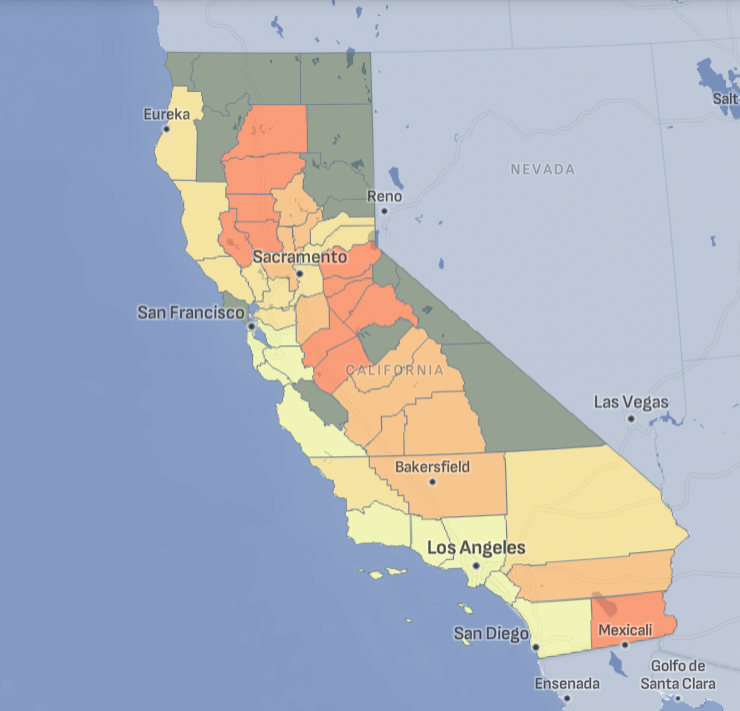
To fill that gap, the team analyzed daily heat index and wildfire-specific PM2.5 data for every census tract in the state, flagging extreme heat days, extreme smoke days, and days when both occurred together. They paired that hazard data with vulnerability indicators from CalEnviroScreen 4.0 — things like asthma rates, cardiovascular disease, poverty, and housing burden — to produce a health impact rating for every community. The findings are striking: Imperial County tracts logged nearly five times the state average of extreme heat days, Lemoore in the San Joaquin Valley saw four times the state average of combined heat-and-smoke days, and one community near Clear Lake had more than double the state average of combined exposure days.
The project's main outputs are a public Hot & Smoky Data Tool, where anyone can look up exposure and vulnerability for their address or county, and a StoryMap collection featuring three community spotlights — Imperial County, Lake County, and Fresno/Kern/Kings Counties — that show how these climate extremes affect farmworkers, tribal communities, seniors, and other under-resourced groups on the ground. The methodology is designed to be replicable for other states facing overlapping climate hazards, and the team is now looking for funding to extend the dataset past 2018 to capture the more severe wildfire and heat seasons that have followed.
KEY PROJECT INFORMATION
Project Time Period
Original Timeline: July 1, 2022 – June 30, 2024
Extended Timeline: Extended to June 2025
Project Funder
NASA Equity and Environmental Justice Program (Award No. 80NSSC22K1684)
Project Partners
- UCLA’s Center for Healthy Climate Solutions
- Tracking California
- Howard University
Project Contact:
Please contact joanna.wilkin@trackingcalifornia.org for more information.